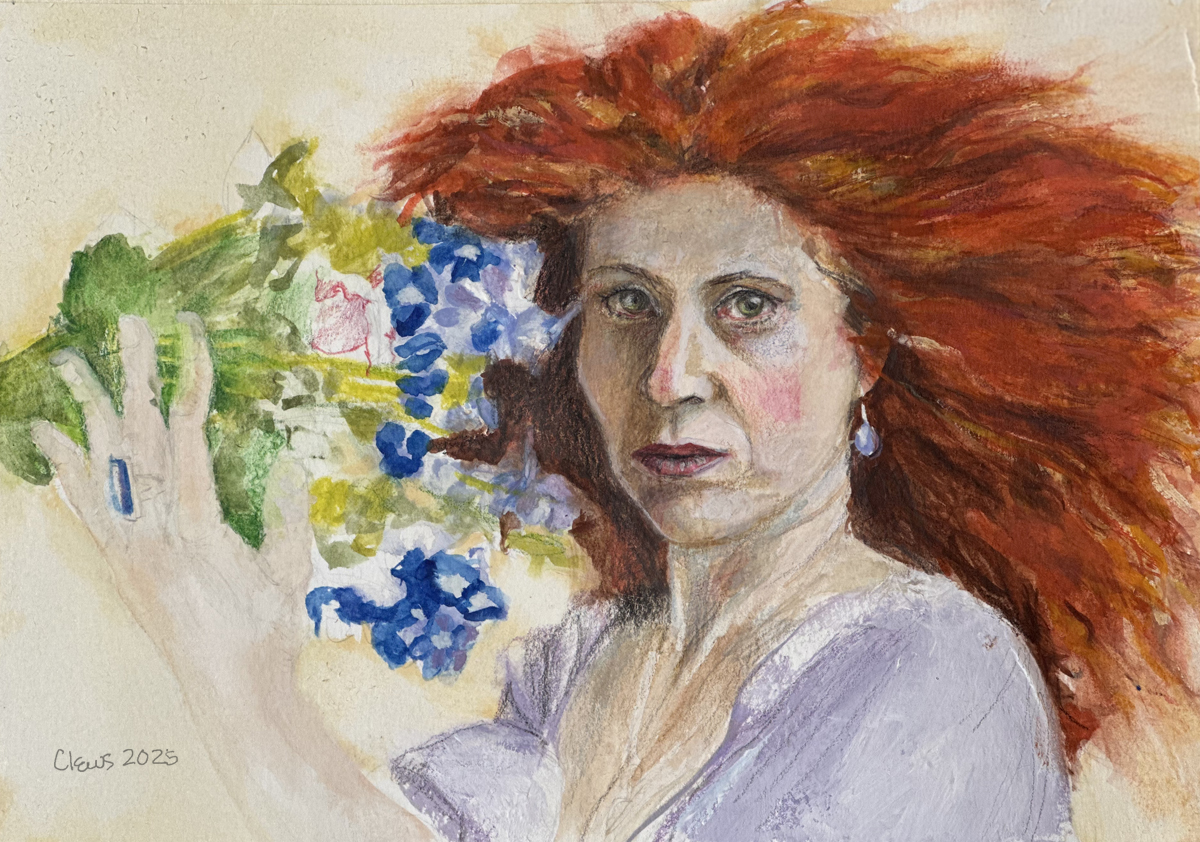
RUBIES IN CRYSTAL
Does language hover between my nerve endings and the world, or is language my skin itself?
Sheath of feeling. Words groping to touch air.
My Moleskine Folio Sketchbook A4
%613 %UTC, %2012, %0:%Jan %ZIndia ink drawings, moleskine, Moleskine sketchbook, multi-media, multiple styles, multiplicities, poem paintingsI have created an album for my Moleskine drawings. They are quite diverse in their styles I think. Some of them I like; others need more work. I put a detail of one of my favourites first, because that's for show, but then they appear in the order in which they were created, which is not always the order of the pages...
If you click on any of the thumbnails, a lightbox will appear, with all the images in a row on the bottom -click on the next one to make it large, and then you don't have to move your mouse from that position, just keep clicking and you'll go through all the images at screen size. I like the lightbox because the background is black. Embedded below the table I created for the thumbnails is a slideshow, with the captions (the little captions icon in the bottom left of the slideshow window is a toggle switch, click on the playbar and then on it to make them disappear).
I'm not very far into the Mole, and it is my project for the year. Expect a video when the sketchbook is finished!


If you click on any of the thumbnails, a lightbox will appear, with all the images in a row on the bottom -click on the next one to make it large, and then you don't have to move your mouse from that position, just keep clicking and you'll go through all the images at screen size. I like the lightbox because the background is black. Embedded below the table I created for the thumbnails is a slideshow, with the captions (the little captions icon in the bottom left of the slideshow window is a toggle switch, click on the playbar and then on it to make them disappear).
I'm not very far into the Mole, and it is my project for the year. Expect a video when the sketchbook is finished!
 |
 |
 |
 |
 |
 |
 |
 |
 |
 |
 |
 |
 |
 |

|
Comments
A Dance Videopoem: Shadow Cave
%844 %UTC, %2011, %0:%Oct %ZActive Imagination, Akashic meditation, dance, fairytale, integrating the self, multiplicities, pagan, postmodern fairytale, shadow selves, Shaman, subjectivities, tribal, video poetry, videopoem, Wiccadirect link: Shadow Cave.
 [The video is subtitled, so you can read along if you like, or have Google automatically translate the text into one of 25 languages. The option appears after you press play. If the cc in the play bar is red, the subtitle track is on; if black, it's not. Mouse click to toggle. Click on this image to see the steps to opening the subtitle/caption file:
 This videopoem is a postmodern fairy tale. Sort of Jungian. Integrating the shadow into the self. I re-wrote a piece I'd written many years ago of an inner journey though a land of strange figures representing repressed selves.
And I did everything in this video. What a lot of work! Shot the clips with a tripod. Edited the footage so many times that it's like a Samurai sword, beaten, and wrapped onto itself, over and over again. At one point I so overloaded my video editing software that it crashed every few minutes. But I pushed it, until the effects I was seeking emerged.
That she becomes quite pixelated in it is fine - it's all reflection, image, celluloid, burned light, a digitally composed moving image.
As an artist, I cannot help but think of the screen as a canvas, and so I expect that some of the all-over appearance is influenced by Color Field Painting, like a Larry Poons, has an abstract art quality to it. Meaning, while there were probably 50 cuts, I didn't do any zooming or duplicating or other fascinating video possibilities.
Also the tribal influence is strong. That's my childhood in an African jungle in Zambia, it comes out from time to time. This is the first video that I've attempted to create a sound track for. I used rattles, a singing bowl, a bell, two different drums. Since it's all quite primitive, the story, the dance, even the reading has a colloquial quality to it, I wasn't too worried about melody. My postmodern fairytale needed a strange and primitive soundscape, which it certainly has. ::smiles::
The dance footage was shot for my forthcoming videopoem, a triptych, Tangled Garden. (Which I have been working on for 5 months and hopefully will one day finish.) But, see, I had this abstract pastel clip that emerged from another project... oh, background, I thought, so went looking among my clips for something that might work with it. That's how it goes...


White Petal
%538 %UTC, %2011, %0:%Jul %Zflowers, multiplicities, uncertainty, video poetry, yoga dancedirect link: White Petal
After recording a few ad-lib voiceovers, and being unable to leave this project alone, finally I wrote something along the lines that I'd hoped for. Which was a discussion of relationship, reminiscent of Annie in Woody Allen's 'Annie Hall (1977)' or Cristina in his 'Vicky Cristina Barcelona (2008),' or like a Wong Kar Wai character who simply can't commit, simply can't, like York in 'Days of Being Wild (1990).' The character Birkin's description of relationship in D.H. Lawrence's 'Women in Love (1920)' before he marries, along with Lawrence's writings of the sexual electricity between people was an influence. There's a little Germaine Greer here too, I think ('Female Eunuch (1970).' And all those women who became nuns during the centuries so they could gain an education and could write, paint, compose outside of the confines of marriage and having 16 children. Some of us dance to our own music. (Said with the grin of a Cheshire Cat.)
Don't forget that 'Faded opulence. Over-the-edge-of. Yet floral abundance. The flowers are the stars—beauty, that edge of fading.'
See also Erica Jong's article, 'Is Sex Passé?'
People seem generally to prefer no poetry voiceover with one of my creative movement/yoga dance videos, so I have, instead, written something that is more of a narrative, that has enough of a story and a philosophy, but is I hope embodied in the movement of the woman who's on the edge of.
I wrote a story that I hope is captivating, whether you agree with the point of view or not. There is a push/pull here. The flowers are like a visual refrain, a chorus throughout the piece. The beauty of flowers, the garden, the hidden utopia of Eden within the garden, the garden of sensuality that draws us in and then becomes a way to control women, the way matrimony can be. The text written (after waiting weeks for it to emerge) to discuss something far more serious - women's creativity, and for my generation at least, it remains problematic. Eros, creativity, a life force, arising out of eros (the body, passion), I believe an artist needs this. A woman's muse is not entirely the same inspirational configuration as a man's, and surely each is again differently configured across generations, cultures, ethnicities, sexual preferences, life experience.
_
In the video footage, experimenting... always learning! Trying this and that with the clip. Having fun, and it shows in the humour of the piece.
There are sections to this video: doubles (video itself a type of mirror or reflection of the world), single, layering, shifts in colour and style as the yoga dance continues.
Who are we? Repetitions of ourselves. Our memories create us in our fragmentary identities. I fold into who I was or who I will become. Uncertainty is confusing. People flee from my uncertainty.
White Petal
Look into a dissolving mirror
bones, skin, neurons
the self-image.
This poem is not neat as intact
petal veins, mysterious as garden
fossils.
The poem writes,
rises from ruminations, dried
flowers on my spine
bursting seeds.
_
Danced, videoed, edited by Brenda Clews; background music by Gabrielle Roth and the Mirrors, from an old favourite, Initiation: gabrielleroth.com/
_
The words spoken in White Petal:
I live in the city in a small apartment - a doorway and shelves covered with fabric. I want to see myself dance before it is too late.
As I dance through the years I reflect on who I am. Every incarnation of love in my life remains with me and carries me to the next immersion, the next wave.
I don't seem to have lost any of the great loves of my life, yet I am a woman who prefers to remain alone. I am a recluse, a very private person, master of myself.
I've been married twice. The first time, a five year relationship in total; the second time, fifteen years, but we had children. Both times, that feeling, imprisoned, denied. Not them, but the nature of legal union. Owned. Like being throttled; my creative and intellectual freedom threatened. It was a struggle to stay and I kept ending things, unable to find my footing, my self in the annihilation of coupledom.
Was I there to be a foil to his light, to support him in his work and dreams? Did I feel this nurturing love reciprocated? Each time, I'm not sure why, I began to die, and I need to blossom.
Women blossom in their creativity.
Some of us find deep comfort in the continuity of nuptial relationships. Others find themselves choked out in the garden of marriage.
I am not a relationship type. I love, and love deeply, but go in fear of being caught, being hitched.
Every incarnation of love in my life remains with me, carries me to the next immersion.
I am sensual, but have spent vast stretches of my life alone.
When you touch the Tantric nerve, sweet pleasure moans. Do you remember?
It's like a saxophone and you wonder if everyone can hear it. The music, sinewy lightning.
Once the pleasure grabs you, the nerve pounds in your blossoming. Helpless, this vortex. Sink, this magnet's circuitry is on. The cells murmur.
Grind, lubricate. Thrust. Push yourself into infinity. Lose yourself in the moment; lose all moments.
I find it hard to dance with anyone else. My rhythms never quite fit, my movements an outer expression of an inner drama being realized through the dance. I dance for my muse.
My muse captivates me endlessly. My muse is demanding. My muse insists without respite until I do. My muse drags me into this dance and makes me write these words of my life. My muse keeps me half-hidden while revealing a vision in my art. I endlessly seek what moves inspiration into artistic form.
I seek the pulse, the core of mystery, the orgasm of the flower.
My life is a vision, of loneliness, love, dry deserts and blossoming oases. My drum is tribal and I dance shamanically with my gliding, writhing, undulating body of passion.
_

Each of those boxes is a video layer -
to give you an idea of the complexity of the construction of the piece.
Comments (11)
"Green Goddess" Masque
%538 %UTC, %2011, %0:%Jun %Zdance, fertility figures, festival of the trees, forest dance, masked dance, multiplicities, pagan, Summer Solstice, the green man, the green woman, video poetry, videopoem, videopoetrydirect YouTube link: "Green Goddess" Masque
"Chthonic goddess of the greening earth. Wrinkled, like tree bark, painted, an exotic glade. Process, the recycling of Nature, life emerging from death. An organic art. The mask's fronds as if growing out of the forest floor in the Spring. Papier-mache, mulch: paper, or leaves. The face as landscape; the face carrying the landscape with it. Flower colours framing her face; the iridescence of insects, sheen of dragonfly. Feathery wings, plumed serpent, vestiges of living vines. A vision of a Nature spirit, Summer Solstice, a Midsummer Night's Dream. Shaman of the forest. Tutelary guide in the rainforest. Jungle of the imagination. Then the Surreality of the sky-blue mask on the greening gold fields of her face: I offer you a masked mask."
After the papier-mâché green goddess masque was finished, I wrote some of the thoughts I had while making it. That became the prose poem.
Last Spring I had wanted to make a dancing video with the mask and the prose poem, but it didn't happen until a few days ago. The footage is from a 4 min clip of the only usable footage from a shoot in High Park in Toronto with my daughter not actually on camera, but affecting things.
A blog post from 2009 with photos documenting the process of making the masque, along with the writing: http://brendaclews.blogspot.com/2009/11/green-goddess-papier-mache-masque.html
This video is part of my multi-media work, 'Green Fire': http://www.brendaclews.com/green-fire
The background birds and forest track is a mix I made mostly from http://freesound.org/
__
In a class once, where the professor had taken us through a very dense reading of a movie, someone asked, 'Did the director think of all that when they made the movie?' While we would like our work, poems, photographs, artwork, videos, to stand on their own, sometimes we also like to discuss some of the thoughts we had while composing them.
I would ask that you please not consider this personal essay as an explanation of the videopoem, though. The response and thoughts of the viewer can and should differ from my own - the artist is never responsible for the meaning of a work, only the viewer, reader, audience has that privilege.
A good poem, for me, is always a repository of a body of knowledge. A poem is a condensation of part of our history, be that political, social, personal, or intellectual. A poem carries a body of knowledge with it, and this knowledge can be unlocked by the reader/viewer who cares to delve into the background of the poem's images.
All I'm doing here is talking a little of my thought process while making the masque and composing the videopoem. Some of the knowledge I have gathered and woven into this piece. Your responses to the final product, the videopoem, will, of course, be different.
Here are some of my meandering notes:

My masque wears the landscape of the green goddess. I sought to create a figure representing the processes of life, death, recycling/rebirth in the performance - through the costume with its mask, the movement, and the prose poem. I hoped to achieve a videopoem that was ethereal, earthy, surreal and entertaining.
In the process of making the masque, planning a videopoem, sewing a costume, and the 30 hours of editing the footage into the video you see here, many thoughts crossed my mind. I'll briefly touch on a few themes: a resonance with the Green Man motif, Minerva's owl, a little on subjectivities or notions of the self, that this is also a Solstice celebration, and about my discomfort with producing 'creative movement/dance' videos at my age.
My "Green Goddess" masque reminds me of the Green Man: a drawing or sculpture "of a face surrounded by or made from leaves. Branches or vines may sprout from the nose, mouth, nostrils or other parts of the face and these shoots may bear flowers or fruit." The Green Man is usually an architectural ornament on churches, buildings or gates in parks, and so on. The article in Wikipedia continues, "The Green Man motif has many variations. Found in many cultures around the world, the Green Man is often related to natural vegetative deities....Primarily it is interpreted as a symbol of rebirth, or "renaissance," representing the cycle of growth each spring." The 'Green Goddess' masque has leaf-like fronds in her headdress and the colours of the wilds on her painted face. My prose poem refers to many of the same vegetative processes of nature. The dance is meant to be of a nature spirit. She is like a counterpoint to the Green Man. They are fertility figures, emblems of the fecundity of Nature.
I included the sound of an owl hooting; though the video was shot in daytime, I created darker clips in the editing to create a motion of light and dark throughout the video. Always in the jungle there is danger (I lived in an African jungle in Zambia as a child so know this), and the owl carries that haunting in its birdcall. The owl is also sacred to the Ancient Roman goddess, Minerva: "She was the virgin goddess of poetry, medicine, wisdom, commerce, weaving, crafts, magic, and the inventor of music. She is often depicted with her sacred creature, an owl, which symbolizes her ties to wisdom." All of which is appropriate to this videopoem.
Being a 21st century woman, concepts of subjectivities, construction of the self, the ego, in the midst of the natural abundances of the earth, the way as individuals we are part of the larger processes of life and death is important. Hence the masque. Who are we?
During the days it took to make the papier-mâché mask, I thought about how our masks enable us to be who we are. Our performative aspects reveal us to ourselves and others. We construct ourselves through our masques, and reveal ourselves more fully to each other when we are disguised. Yes, I know it is a bit of a double take, and the opposite approach to the Buddhistic peeling of layers of the self to arrive at essence. Yet, like the Buddhist practitioner sits in the semi-lotus pose of the Buddha meditating, and thus takes on the pose (or mask) of the Buddha to achieve selflessness, the masque also removes individual personality and reveals the archetypal nature of our essence.
Masqued or un-masqued, wearing a mask to represent the deity, to represent the spirit being called, or peeling away layers, perhaps we arrive at the same realization of 'selfless self.'

A forest doppelgänger appeared in the footage, in the imprint of a large woman of leaves, a reflection of the dancer, and I have no idea how that happened, and was not able to produce it in other sections, but I really grokked it. That vegetative figure has resonances with resurrection motifs, perhaps even the horror genre of movies when plants take on human form and come to life. A bit humorous, yes. Yet it is as if the masqued shamanic dancing called the spirit forth. A large figure emerges like a forest angel, the manifested double of the woman dancing a medicine dance, a potent force of the power of nature, a little dangerous if not directed properly by the shaman to become the energy of a spirit of healing. The appearance of a doppelgänger has made me very happy with this little video.

It is nearly Solstice, and a celebration of the sun at its zenith in the sky in the Northern Hemisphere here in Canada. I edited the video to culminate in a moment of solar worship, an adoration of the light of life, perhaps the figure becomes a solar priestess for a moment (for she has long since stopped being me), along with the overall representations of the fertility, decay and recycling of greening Nature.
The video is delicately layered and looks best on HD. Different parts of it play in differing speeds of slow motion. The video itself is composed like a compressed poem of images, and is one of my best video poems, I feel. It is, of course, not without humour.
If I'd had this technology 20 years ago! It is hard to produce 'dance videos' at my age, especially in a culture that focuses on youthful beauty, and while there are two more planned (since musicians have sent me music for specific performance pieces), I may not be able to do these types of "creative movement/dance" videos much longer. If I get those last two done, this year will have seen 5 dance videos, wow. A long-time dream, to do this, to create poetry dance videos.
The woman in the "Green Goddess" masque, therefore, wishes you the courage to realize your dreams.

-
Joining July's Festival of the Trees with this video poem on the shaman of the forest.
Little update: I also took this video poem with me last Sunday, along with some photos of the making of the masque, to a Digital Storytelling workshop (I can't find a direct link, but it's at NFB Mediatheque) with my independent film group at NFB (National Film Board), and was surprised at the positive comments from other participants and NFB staff that I received. Unfortunately, the computer I was working on there froze, so I don't have the piece I produced to show you - though I will link to the video slideshows produced by our group when they become available.
Comments (4)
'dance/ ...indigo folio leaves'
%377 %UTC, %2011, %0:%Apr %Zcreative movement, dance, dance video, Final Cut Express 4.0.1, inspirational, José Travieso, multiplicities, NaPoWriMo 2011, poetry, poetry in motion, prose poetrydirect link: dance/ ...indigo folio leaves (with poem)
A dance that is creative movement, a moving meditation. Brenda Clews: prose poetry, dance, video. Music: José Travieso's track, 'Monster,' on his album, "No More Faith."
Music
...enters your backbone, joints, plucks the
cartilage holding you together. Music is the
moon of the red tides of your bloodstream.
Drift to and fro, a willow tree, or sway, bend,
a flamenco, stretch, purple morning glories
on the vine, jump. Sway your hips, delta of
fiery flow. Express yourself, woman. No-one
is watching. Say it all. The lyric travels tenderly
through your wrist, a memory of the wind on the
hill. You are an instrument of the musician who
is absent, gone. Whose music plays on; who
does not know you exist. Orphean muse. Twirl
on the floor, the beat in your ankles, room
spinning, see the canvas walls, luminous see
the sun, moon, stars that are always there.
Spin on the clock turning. Give everything.
Wanton woman. Harlot of the night. Mother of
angels. Insufferable radiance. Black hole of
emptiness. Sweet moan nectar.
Mystery dangles like your silver bracelets,
the ghosts are present. Approach yourself by
disappearing. Undulate your liquid bones.
Beautiful sensuality. Seek invisible illumination
in your writhing steps. Leave time, transform in
your multiplicity, a seer searching the spheres.
Manifest your dreams. Shake them out of the air
to materialize before you like light forms. Shimmy,
wet sweat, a flag in a wind storm. Thunder the
floor. Witch, werewolf, Goth beauty, fragile
starchild, cyberpunk, pull the sky down. Sway
those hips, woman. Sway them until you ignite.
Dance with your ineffable muse. Just, dance.
I pull purple veils over my vision, indigo
blue silk lights and shadows.
Listen: dance on the stage of your
imagination.
© by Brenda Clews, 2011

Contemplating the Muse


dance/ ...indigo folio leaves
%925 %UTC, %2011, %0:%Apr %ZBig Tent Poetry, creative movement, dance, dance video, Final Cut Express 4.0.1, José Travieso, multiplicities, NaPoWriMo 2011, poetry, poetry in motion, prose poetrydirect link: dance/ ...indigo folio leaves
Folio: a sheet of paper folded once to make two leaves of a book or manuscript.
Late afternoon, when the spring sun was pouring in, I videotaped some dancing to José Travieso's track, 'Monster,' on his album, "No More Faith": Besides being technically beautiful, quite goth baroque in its composition, there is an undercurrent of feeling in this music. Music like this can awaken the inner self in its dance, or this is how it calls to me.
And I layered two different dances to the same music: first I separated the figures, but it didn't look quite right, so I superimposed them, allowing the dance of the two to occur in the same space, an intertexuality of subjectivities, like folio leaves.
I see the woman of the dance transformed into figures that are, but are not me.
I wrote to the Spanish musician, José, on his track, 'Monster': 'This piece is so beautiful, like the passion of angels, pain and transcendance in the music that you play, what is the monster? Is beauty the monster?
How can beauty be a monster?'
He teaches all day, and at night, the music. Stressful, hard. He rarely has time to read, walk, visit friends, relax. "Everyday I work on it with passion... or maybe just obsession. So, everyday, when I'm recording an album, I feel more and more tired, it consumes me... Music is my own monster, my search for the perfection and the beautiful thing is my own monster. This is my explanation."
'I understand. A consuming passion. A beauty that devours its creator in consummation.
I, too, prefer art that is vulnerable, without pretence.'
[still working on this prose poem]
Music
...enters your backbone, joints, plucks the
cartilage holding you together. Music is the
moon of the red tides of your bloodstream.
Drift to and fro, a willow tree, or sway, bend,
a flamenco, stretch, purple morning glories
on the vine, jump. Centre in your hips, your
delta of fiery flow. Feel your pain, power, joy.
Express yourself, woman. No-one is watching.
Say it all. The lyric travels tenderly through your
wrist, a memory of the wind on the hill. Be the
hands that play you. You are an instrument of the
instruments of the musician who is blind, absent,
gone. Whose music plays on; who does not know
you exist. Orphean muse. Twirl on the floor, the
beat in your ankles, room spinning, see through
the canvas walls, stars, sun, moon luminous
on the clock turning. Give everything.
Wanton woman. Harlot of the night. Mother of
angels. Insufferable radiance. Black hole of
emptiness. Sweet moan nectar.
Be loose as a cigarette on the lip in Rio de Janeiro.
The ruffle on a lacy skirt in Dusseldorf. Like the
ruins of the Colosseum in Rome. Glide as
diamonds on the Aegean Sea. Icy tundra of the
Arctic. Emerge and submerge a dorsal fin in the
Caribbean. Become a stone age myth, a magic
amulet hewn from rock. Goddess of the Oroborus
serpent, undulate your liquid bones. Mystery dangles
like your silver bracelets, the ghosts are present.
Approach yourself by disappearing. Rhumba to
this moment; tango to the other side. Primavera of
being. Beautiful in your sensuality. Seek invisible
illumination in your writhing steps. Flee time,
transform in your multiplicity, a seer searching
the spheres. Manifest your wishes - your dreams.
Shake them out of the air to materialize like light forms.
Shimmy, wet sweat, a flag in a wind storm. Thunder
the floor. Cross mid-section through a Pythagorean
theorem and come out the other end of Leibniz's prisms.
Play on Goethe's colour wheel. Trip like a stream
dashing over rocks as smoothly as a Shakespearean
sonnet's sexual ambiguity. Witch, werewolf, Goth
beauty, fragile starchild, cyberpunk, pull the sky
down. Sway those hips, woman. Sway them until you
ignite. Be you while you dance; don't let them
touch you. Dance with your ineffable
muse. Just, dance.
I pull purple veils over my eyes, in love with
indigo blue silk lights and shadows.
I dance the white and black keys of a harpsichord
while it dances me.
Listen: dance on the stage of your
imagination.
© by Brenda Clews, 2011 (a sort of inspirational poem for women, but there's a lot going on in it, too)


___
If you're fascinated by the way videos evolve through versions, there are two earlier versions at a Picasa album: The Canvas Backdrop
I've entered this poem in the Big Tent Poetry's Ring of weekly poems. 'dance, ...indigo folio leaves' is a performance piece that includes video and poetry. One, a poetry of motion; the other a written poem. They are on the subject of dancing, and the poem is still being drafted.
Comments (10)
A Dance in Purple, in Folio Leaves
%506 %UTC, %2011, %0:%Apr %Zdance, dance video, José Travieso, multiplicitiesA Dance in Purple, in Folio Leaves from Brenda Clews on Vimeo.
(Recommend watching 'fullscreen' - movement and detail clearer.)
Folio: a sheet of paper folded once to make two leaves, or four pages, of a book or manuscript.
Late afternoon on Saturday, when the spring sun was pouring in, I videotaped some dancing to José Travieso's track, 'Monster,' on his album, "No More Faith." Besides being technically beautiful, quite Baroque in its composition, there is an undercurrent of feeling in this music. Music like this can awaken the inner self in its dance, or this is how it calls to me.
And I layered dances to the same tune: first I separated the figures, but it didn't look quite right, so I superimposed them, allowing the dance of the two to occur in the same space, an intertexuality of subjectivities, like folio leaves.
The figure is me mostly because I am a very private person and those closest to me, extended family I guess, don't want to be videoed. I see the figure as not me, though me.
I always leave space for text, but perhaps, there won't be any, it's unnecessary. Though it does need a title, and perhaps an inscription at the beginning, a quote, an image, not sure.
When this video is finished (and it might already be, not sure), I'll upload to YouTube (Picasa's great but doesn't offer an embeddable player like YouTube does, and without paying Vimeo you can only upload videos up to 500MG a week there, so YouTube for a higher resolution and potentially more viewers).
 |
| From The Canvas Backdrop |
(The Picasa version, which is showing a blank green screen to some viewers, hence uploading to Vimeo this morning.)
___
After I'd finished this version of the video, I thought of this painting and poem, from 2006:
 Dancing of the Selves, painting and photographs, ©2006 | Dancing of the Selves What is the self? Peel away to nothing. Only energies, inner winds and flames streams of thought a body of cells of earthdust. Who am I? Am I my memories shifting and changing like ice flows or the sand of the desert? We are transducers, relay switches, cross-currents of selves. I deconstruct in paint across the canvas. Am I what I offer-- scrawl of words, strokes of paint, a flash dance through the air, a few ideas, a point of gravity where the light bends? | My children who tumbled out of me? I am a link in the generations, an ancestor's granddaughter, great aunt of the future, a name for genealogists. A living person breathing over the page where I write. A slight tangle in the ganglia of neurons, and my memories, gone. That's not me. I am who I am loving you. |
Comments (2)
Dance of the Selves
%751 %UTC, %2011, %0:%Apr %Zdoubles, multiplicities, NaPoWriMo 2011, photographsA poetry of motion today...
Birth of the Self
Protected Search On
Photos from an earlier version of the video I'm working on - still 5 hours to render on the current version, before saving as a movie file or uploading to a temporary place for possible feedback before I finish it.
 |
| From The Canvas Backdrop |


 |
| From The Canvas Backdrop |
Photos from an earlier version of the video I'm working on - still 5 hours to render on the current version, before saving as a movie file or uploading to a temporary place for possible feedback before I finish it.
Dance of Gold Canvas
%806 %UTC, %2011, %0:%Mar %Zdance, experimental, multiplicities, performance poetry, video poetrydirect link: Dance of Gold Canvas
A performance piece, hints of the epic, the metamorphosis that life is. Age and grace. Frivolity and art. Pain and laughter. Humor and seriousness.
In the dance I speak a poetry whose volume I dimmed to just below audible. A poetry below the threshold.
And of this nearly silenced subliminal speaking? It's part of the motion poem. A tantra. Dance, the journey of the soul, guttural, the women crying for help during the tsunami, women in war, survival, a Blakean crawl across the canvas at one point and I allowed some words to rise, utterances, Butoh not in style but expression perhaps in parts, and of strength, empowerment, and the fecund, the buds of spring about to burst, Boticelli's Primavera, the rich earthy tapestries of the natural world, and Zen, laughter at the absurdity of life, and love, love everywhere, enjoyment in the body itself, sensuality, a wit, humour. Dancing with shadows of the self was intriguing in the editing, as was slipping between colours of a rich Buddha saffron and the smudging shadows of black and white. Editing itself a psychic process, shaping a moving poem.
How a video comes to be is almost surreal. Magic in the editing. I enter a state where time doesn't matter and think it closest to the dream, the mind's most deeply creative process, where you're exploring something, and you're not quite sure what it means, or where it's going, but are fascinated, compelled.
A dance poem, an enactment, a one-act play. Perhaps in this piece something visionary, in that there is resolution to the conflict, the paradoxes, in the process of art itself, in the dance of the self.
Self-conscious but daring to anyhow, give everything you've got.
The dance of the self within Krishna's cosmic dance, the spinning painting of us on the canvas, the dance we all share.
Performed, videoed and edited by Brenda Clews.
Background music by arnoldsrecords, 'There's a hole, there's a wall.'
-
Without memory, the fragile present disappears.
blog: Rubies in Crystal
art and writings: brendaclews.com
Starfire, an album of poetry performance pieces
(listen, download for free)

Ruminations on Creating Videopoetry: Unities
%820 %UTC, %2011, %0:%Jan %ZDeleuze, multiplicities, videopoetry, videopoetry philosophyEinsenstein criticises Griffith for...having conceived of...unity in a completely extrinsic way as a unity of collection, the gathering together of juxtaposed parts, and not as a unity of production, a cell which produces its own parts by division, differentiation; for having interpreted opposition as an accident and not as the internal motive force by which the divided unity forms a new unity on another level....Eisenstein retains Griffith's idea of an organic composition or assemblage of movement-images: from the general situation [situation d'ensemble] to the transformed situation, through the development and transcendence of the oppositions. But it is true that Griffith did not see the dialectical nature of the organism and its composition. The organic is indeed a great spiral, but the spiral should be conceived of 'scientifically' and not empirically, in terms of a law of genesis, growth and development.In my exploration of the potential of video in the production of a visual moving-poem, I have surely relied on juxtaposition. The field of film is so vast I didn't know where to begin. I had to teach myself the editing software as I sought ways to present my poetry in an enhanced videopoetic form. With the little footage I shot, I created videopoetry montages of essentially juxtapositions - images, moving or slowed or stilled, layered over each other with various opacities, tracks of the reading of the poetry and sometimes the visual text itself, and music. I hoped that through intelligent juxtapositions I might arrive at a unity of form that disassembled even as it assembled a series of images and thoughts through its duration (meaning in the techniques of layering where there is a new unity that, because you can see the different layers, maintains a separation of the parts that constitute it).
Gilles Deleuze, Cinema 1, The Movement-Image, trans. Hugh Tomlinson and Barbara Habberjam (first published in France in 1983). Minneapolis: University of Minnesota Press, 1986, pp.32-33.
I tried to keep my videopoems short. As I strived for simplicity and enough activity to keep the viewer watching, I perhaps forgot what Deleuze speaks of.
I constructed rather than composed. I layered juxtaposed images rather than creating from a vision that emanates its unity from within.
But this is modern art - collages of images, juxtapositions of ideas, thoughts, various forms of intersplicing the conversations of the culture. It's okay to allow oneself to swim in this field of rich imageries in diverse fields and to take from here and there as one constructs a piece.
When I write a poem, I begin with an image and then allow the images, ideas to develop of their own volition - I never know where the poem is going, or how it will get wherever it might. I do not live my life with teleologies (goals, ends in mind) and nor does my poetry proceed this way. This way of working is also how I compose videopoems. I don't storyboard, or have any preconceived ideas of what images or footage I might go out and videotape to express whatever it is that is emerging.
Rather, my videopoetique is closer to something created out of found art (even if I've shot all the video), or at least that's how I've approached it thus far.
In my profile at YouTube I wrote:
To me, the videopoem turns back the monstration of film, in which narrative develops visually without language. It attempts to marry word and image. The true videopoem, in my view, is not of pictorial scenes illustrating the narratorial sequences of poetry, but of unique and different partners who combine in a new art form. We move beyond the illustrator's art. We are not 'giving a visual' for 'a poetic line.' The two, visual and verbal, connect not as simile, like to like, or allegory, this represents that, but as metaphor, surprising leaps that unfold new possibilities.
And this I still emphatically mean. We are exploring a new art form.
But reading Deleuze's book -Deleuze, where I turn for ideas, for philosophical depth- has caused me to think of ways to express unities by considering opposites like these: construction and composition; found and built; accidental and planned; juxtaposition of found images and organic unity; and so on.
A small collection of my videopoems, beginning with the most recent.
Sep 2026
Jul 2026
Apr 2025
Feb 2025
Jun 2024
Apr 2024
Aug 2023
Oct 2022
May 2022
Oct 2021
Sep 2021
Jul 2021
May 2021
Jan 2021
Oct 2020
Aug 2020
Jul 2020
Jun 2020
May 2020
Dec 2019
Sep 2019
Aug 2019
Jul 2019
May 2019
Apr 2019
Feb 2019
Jan 2019
Nov 2018
Sep 2018
Aug 2018
Jul 2018
May 2018
Apr 2018
Mar 2018
Feb 2018
Jan 2018
Dec 2017
Nov 2017
Oct 2017
Sep 2017
Aug 2017
Jul 2017
Jun 2017
May 2017
Apr 2017
Mar 2017
Feb 2017
Jan 2017
Dec 2016
Nov 2016
Oct 2016
Sep 2016
Aug 2016
Jul 2016
Jun 2016
May 2016
Apr 2016
Mar 2016
Feb 2016
Jan 2016
Dec 2015
Nov 2015
Oct 2015
Sep 2015
Aug 2015
Jul 2015
Jun 2015
May 2015
Apr 2015
Mar 2015
Feb 2015
Jan 2015
Dec 2014
Nov 2014
Oct 2014
Sep 2014
Aug 2014
Jul 2014
Jun 2014
May 2014
Apr 2014
Mar 2014
Feb 2014
Jan 2014
Dec 2013
Nov 2013
Oct 2013
Sep 2013
Aug 2013
Jul 2013
Jun 2013
May 2013
Apr 2013
Mar 2013
Feb 2013
Jan 2013
Dec 2012
Nov 2012
Oct 2012
Sep 2012
Aug 2012
Jul 2012
Jun 2012
May 2012
Apr 2012
Mar 2012
Feb 2012
Jan 2012
Dec 2011
Nov 2011
Oct 2011
Sep 2011
Aug 2011
Jul 2011
Jun 2011
May 2011
Apr 2011
Mar 2011
Feb 2011
Jan 2011
Dec 2010
Nov 2010
Oct 2010
Sep 2010
Aug 2010
Jul 2010
Jun 2010
May 2010
Apr 2010
Mar 2010
Feb 2010
Jan 2010
Dec 2009
Nov 2009
Oct 2009
Sep 2009
Aug 2009
Jul 2009
Jun 2009
May 2009
Apr 2009
Mar 2009
Feb 2009
Jan 2009
Dec 2008
Nov 2008
Oct 2008
Sep 2008
Aug 2008
Jul 2008
Jun 2008
May 2008
Apr 2008
Mar 2008
Feb 2008
Jan 2008
Dec 2007
Nov 2007
Oct 2007
Sep 2007
Aug 2007
Jul 2007
Jun 2007
May 2007
Apr 2007
Mar 2007
Feb 2007
Jan 2007
Dec 2006
Nov 2006
Oct 2006
Sep 2006
Aug 2006
Jul 2006
Jun 2006
May 2006
Apr 2006
Mar 2006
Feb 2006
Jan 2006
Dec 2005
Nov 2005
Oct 2005
Sep 2005
Aug 2005
Jul 2005
Jun 2005
May 2005
Apr 2005
Mar 2005
Feb 2005
Jan 2005
Sep 2004
Jun 2004
May 2004
Oct 2003
Jul 2026
Apr 2025
Feb 2025
Jun 2024
Apr 2024
Aug 2023
Oct 2022
May 2022
Oct 2021
Sep 2021
Jul 2021
May 2021
Jan 2021
Oct 2020
Aug 2020
Jul 2020
Jun 2020
May 2020
Dec 2019
Sep 2019
Aug 2019
Jul 2019
May 2019
Apr 2019
Feb 2019
Jan 2019
Nov 2018
Sep 2018
Aug 2018
Jul 2018
May 2018
Apr 2018
Mar 2018
Feb 2018
Jan 2018
Dec 2017
Nov 2017
Oct 2017
Sep 2017
Aug 2017
Jul 2017
Jun 2017
May 2017
Apr 2017
Mar 2017
Feb 2017
Jan 2017
Dec 2016
Nov 2016
Oct 2016
Sep 2016
Aug 2016
Jul 2016
Jun 2016
May 2016
Apr 2016
Mar 2016
Feb 2016
Jan 2016
Dec 2015
Nov 2015
Oct 2015
Sep 2015
Aug 2015
Jul 2015
Jun 2015
May 2015
Apr 2015
Mar 2015
Feb 2015
Jan 2015
Dec 2014
Nov 2014
Oct 2014
Sep 2014
Aug 2014
Jul 2014
Jun 2014
May 2014
Apr 2014
Mar 2014
Feb 2014
Jan 2014
Dec 2013
Nov 2013
Oct 2013
Sep 2013
Aug 2013
Jul 2013
Jun 2013
May 2013
Apr 2013
Mar 2013
Feb 2013
Jan 2013
Dec 2012
Nov 2012
Oct 2012
Sep 2012
Aug 2012
Jul 2012
Jun 2012
May 2012
Apr 2012
Mar 2012
Feb 2012
Jan 2012
Dec 2011
Nov 2011
Oct 2011
Sep 2011
Aug 2011
Jul 2011
Jun 2011
May 2011
Apr 2011
Mar 2011
Feb 2011
Jan 2011
Dec 2010
Nov 2010
Oct 2010
Sep 2010
Aug 2010
Jul 2010
Jun 2010
May 2010
Apr 2010
Mar 2010
Feb 2010
Jan 2010
Dec 2009
Nov 2009
Oct 2009
Sep 2009
Aug 2009
Jul 2009
Jun 2009
May 2009
Apr 2009
Mar 2009
Feb 2009
Jan 2009
Dec 2008
Nov 2008
Oct 2008
Sep 2008
Aug 2008
Jul 2008
Jun 2008
May 2008
Apr 2008
Mar 2008
Feb 2008
Jan 2008
Dec 2007
Nov 2007
Oct 2007
Sep 2007
Aug 2007
Jul 2007
Jun 2007
May 2007
Apr 2007
Mar 2007
Feb 2007
Jan 2007
Dec 2006
Nov 2006
Oct 2006
Sep 2006
Aug 2006
Jul 2006
Jun 2006
May 2006
Apr 2006
Mar 2006
Feb 2006
Jan 2006
Dec 2005
Nov 2005
Oct 2005
Sep 2005
Aug 2005
Jul 2005
Jun 2005
May 2005
Apr 2005
Mar 2005
Feb 2005
Jan 2005
Sep 2004
Jun 2004
May 2004
Oct 2003