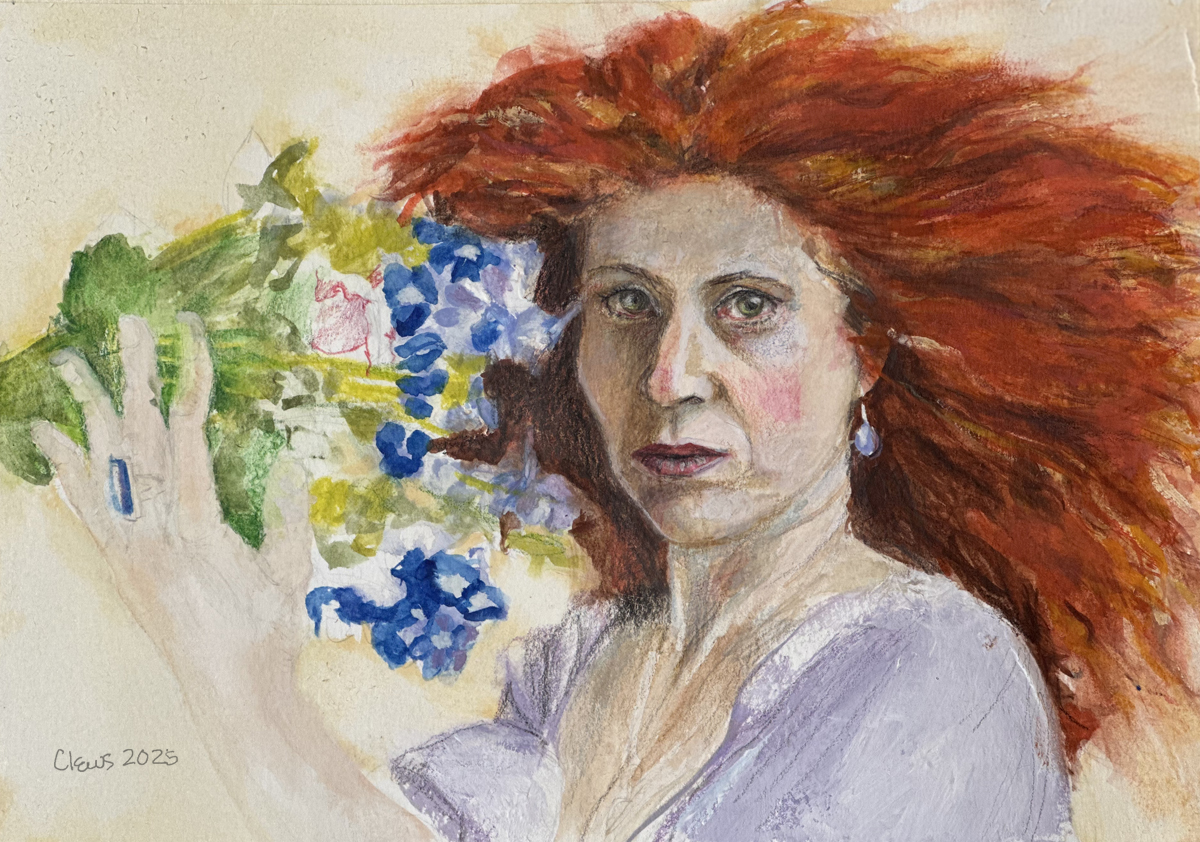
RUBIES IN CRYSTAL
Does language hover between my nerve endings and the world, or is language my skin itself?
Sheath of feeling. Words groping to touch air.
Oct Poetry & Music Salon photos
%746 %UTC, %2015, %0:%Oct %ZThe October Salon! Was wonderful!!!! Many thanks to Karen Shenfeld for hosting a beautiful Salon, and to Isabel Fryszberg and John Oughton, fabulous features, and the open mics - Bänoo Zan, Sean Mc Dermott, Norman Bethune Allan, Milel BC and Cate Laurier and Neil for sharing their poems! Many thanks to Deb and Aliya of Markham House City Lab who welcomed us and helped figure out where to seat us (since 'the room' was populated with sculptures and so we had to move) and made coffee for us too! xoxo to all!
For names, please visit the Picasa Soirée album.


___


For names, please visit the Picasa Soirée album.


___

Comments
This Saturday! Oct 24th Poetry & Music Soirée: 4-6pm
%720 %UTC, %2015, %0:%Oct %ZA Salon Saturday afternoon! Hosted by my friend, Karen Shenfeld! Love to see you!
Because the inestimable sculptor and painter Tony Urquhart rented the Charotte Hale Gallery (current home for my Salons) this month, we are having our Poetry and Music Soirée just up the street at Mirvish Village - Markham House (610 Markham St)! This is the house Westbank renovated as a showcase for their proposal for Mirvish Village - you can see a model on the ground floor - but we will be upstairs where there is a lovely, bright gallery. Karen Shenfeld, brilliant, warm, wonderful, is hosting this month, and her features are poet John Oughton and singer/songwriter Isabel Fryszberg!!! Open mic spots too! It's 4-6pm, so you can start Saturday night was some cultcha...! After, we'll cross the street and go to the Victory Café for coffee, drinks, dinner, camaraderie.Karen's invitation to you all:
Hello friends!
I am hosting an intimate afternoon Poetry and Music Salon, next Saturday, from 4 PM to 6 PM, in Mirvish Village. I will be reading a few poems to start the afternoon off. The feature poet will be John Oughton, an excellent colleague who was, like me, a former student of Irving Layton's. The feature singer/songwriter will be the multi-talented Isabel Fryszberg, with whom I have also worked on documentary films.
Plus: there will be lots of open mic spots. So, if you would like to read a poem or two, you would be welcome to do so, so long as you get there early enough to sign up.
After the reading, those who wish, can join me and the usual event host, Brenda Clews, for drinks and/or dinner at The Victory Cafe.
Cheers,
Karen
Here are short bios of our main features:
Isabel Fryszberg is a renaissance woman; a singer songwriter, documentary filmmaker, fiddle player, lover of applachian music and an occupational therapist. Based in Toronto, Isabel Fryszberg is a founding member of the award-winning klezmer-swing sextet, Sisters of Sheynville. In 2014, she released her solo debut CD, Hearts and Arrows. Reviewing it, Lenny Stoute of Cashbox Magazine wrote: “If you came for the voice and the heartbreak, Isabel delivers the goods with an uncommon authenticity.” Isabel Fryszberg was recently awarded a community arts grant from the Ontario Arts Council to record original songs with Don Kerr in collaboration with the members of the Creative Works Studio. Isabel founded Creative Works Studio in Toronto to help people with mental health and addiction issues find creative self expression through music and visual arts.
John Oughton was born in Guelph, Ontario, a block away from the home of John McCrae (author of “In Flanders Fields”). He completed a BA and MA in English at York U., where he studied with Irving Layton, Eli Mandel, Miriam Waddington and Frank Davey. After a half-year stay in Kyoto, Japan, he worked at Coach House Press and as a journalist and corporate communicator. He attended the Jack Kerouac School of Disembodied Poetics at Naropa University, and served as a research assistant to Allen Ginsberg and Anne Waldman. John began teaching English in community colleges, and is now Professor of Learning and Teaching at Centennial College. He has published a mystery novel, Death by Triangulation (2015) five books of poetry, most recently Time Slip (Guernica Editions), several chapbooks, and over 400 articles, interviews, reviews and blogs. John is a long-time member of the Long Dash writing workshop. He is also a photographer with three solo shows and several book and magazine covers.
__
Our soirées are a late afternoon gathering of poets and musicians at an art gallery in Toronto. Brenda Clews hosts this beautiful event, which occurs on the last Saturday of the month from 4pm - 6:30pm (most months). We have a music and a poetry feature and about 8-10 5min open mic spots interspersed throughout the hours. All forms of writing are welcome, as well as music. The Soirée is free, but we do pass-the-hat for the features. Our salons are always warm, convivial, supportive and very talented afternoons and I would love you to come out and enjoy a marvellous couple of hours and perhaps share a poem, short story or song of your own. Please put the recurring date on your calendar.
poetry and music soirées Facebook Group page: https://www.facebook.com/groups/poetryandmusicsoiree
___
'Metamorphoses: In Rodin's Studio' at the Musée des beaux-arts in Montréal (iPhone 5s pics)
%458 %UTC, %2015, %0:%Oct %ZIt wasn't the finished bronzes that were of interest, rather the plasters, the drawings, the assemblages of pieces of broken or 'unfinished' sculptures into new sculptures, the photographs, the way Rodin composed prior to.... that drew me to Montréal this week to see 'Metamorphoses: In Rodin's Studio' before it ends this Sunday (Oct 18) at the Musée des beaux-arts.

 One of my favourites was a Walking Man (Rodin did a few), an assemblage of a torso from an older, unfinished John the Baptist sculpture and his legs from yet another sculpture, both joined without polishing and finishing the upper to match the lower. I sketched it while at the gallery, photographed and videoed it numerous times.


Before I went to Montréal, I purchased (and read) the catalogue through Indigo Books. Though quite expensive, the book is stunningly illustrated with many full page photographs from Rodin's studio taken by his photographers, and will only add to your library of beloved art books.
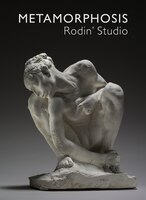 August Rodin (1840–1917) completely revitalized the very language of sculpture with his passion for the creative act. The ongoing interplay of accident and chance in his fragile plasters, bronzes, marble figures, drawings, watercolors, and photographs speak to an endless flow of creation. Rodin’s “studio,” however, must be understood as the small artistic community that worked for and around the master. It consisted of practitioners of specific trades to whom we owe the transformation of one material to another, one dimension to another, under Rodin’s attentive guidance. This book, which accompanies a major traveling exhibition, sheds light on the sculptor’s process and takes stock of his prodigious creativity. It also features masterpieces like the 200 or so figures fleeing in The Gates of Hell, a work Rodin would draw from for the rest of his career, and The Walking Man.
___


Before I went to Montréal, I purchased (and read) the catalogue through Indigo Books. Though quite expensive, the book is stunningly illustrated with many full page photographs from Rodin's studio taken by his photographers, and will only add to your library of beloved art books.
August Rodin (1840–1917) completely revitalized the very language of sculpture with his passion for the creative act. The ongoing interplay of accident and chance in his fragile plasters, bronzes, marble figures, drawings, watercolors, and photographs speak to an endless flow of creation. Rodin’s “studio,” however, must be understood as the small artistic community that worked for and around the master. It consisted of practitioners of specific trades to whom we owe the transformation of one material to another, one dimension to another, under Rodin’s attentive guidance. This book, which accompanies a major traveling exhibition, sheds light on the sculptor’s process and takes stock of his prodigious creativity. It also features masterpieces like the 200 or so figures fleeing in The Gates of Hell, a work Rodin would draw from for the rest of his career, and The Walking Man.___
Photos & Video from the September Poetry and Music Soirée in Mirvish Village
%868 %UTC, %2015, %0:%Oct %ZWe had a small, intimate, friendly, supportive and warm Poetry and Music Soirée on Sat Sept 26th at Charlotte Hale and Associates Fine Art Gallery in Markham Village. Everyone was outstanding, the features, Waleed Abdulhamid, Milel BC, and all our open mics, Stedmond Pardy, Sean Mc Dermott, Bänoo Zan, Alexandra Innes and Jeff Cottrill - we happily filled the hours in a beautiful setting in a restored Victorian house with great acoustics among beautiful, mythical paintings and collages by Blair Drawson. Many thanks to all who came out for my first Soirée in Markham Village and especially to Charlotte Hale, whose gallery it is and who welcomed us into the exquisite space she has created.
For names and other info, please visit the Soirée album on Picasa.


Video of the entire Salon:
direct link: Sep 2105 Poetry and Music Soirée
1. Stedmond Pardy: 1:37
2. Sean McDermott: 5:17
3. Bänoo Zan: 13:49
4. Mikel BC (feature): 17:34
5. Waleed Abdulhamid (feature): 37:53
6. Alexandra Innes: 1:03:56
7. Jeff Cottrill: 1:05:42
Organized, hosted, videoed and edited by Brenda Clews.

___
For names and other info, please visit the Soirée album on Picasa.


Video of the entire Salon:
direct link: Sep 2105 Poetry and Music Soirée
1. Stedmond Pardy: 1:37
2. Sean McDermott: 5:17
3. Bänoo Zan: 13:49
4. Mikel BC (feature): 17:34
5. Waleed Abdulhamid (feature): 37:53
6. Alexandra Innes: 1:03:56
7. Jeff Cottrill: 1:05:42
Organized, hosted, videoed and edited by Brenda Clews.

___
September Poetry & Music Soirée at Charlotte's Gallery in Markham Village
%471 %UTC, %2015, %0:%Sep %ZOn Saturday afternoon, September 26th, 3-5pm, I am hosting a Poetry & Music Soirée at a beautiful art gallery: Charlotte Hale and Associates Fine Art, Photography & Design (588 Markham St -across from Victory Café). This month features a wonderful musician/composer, Waleed Abdulhamid and poet, Milel BC. There are 8-10 open mic spots of 5 min each. All forms of writing are welcome, as well as music. The Soirée is free, but we do pass-the-hat for the features. Our soirées are always a warm, convivial, supportive and very talented afternoon and I would love you to come out and enjoy a marvellous afternoon and perhaps share a poem, short story or song of your own.
Multi-instrumentalist, composer, vocalist, producer and film maker, WALEED ABDULHAMID was born in Sudan. He began performing at the age of 6. In Sudan, Waleed was known for bringing traditional rhythms into popular music. When he left Sudan at age 18, he performed, recorded and toured extensively, appearing at major music festivals in Stockholm, Copenhagen, Frankfurt and Oslo as well as in Finland and Iceland. He demonstrates his versatility on guitar, bass, drums, harmonica, kirin, darabhuka, marimba, congas, djembe, dumbek and tama and has been invited to perform in festivals and conduct workshops (merging music and movement) in Spain, France, the UK and Portugal. Waleed is one of the 12 resident artists at Soulpepper Theatre . He has also played and recorded with David Clayton Thomas, the Motown Legend Band “The Drifters”, Doug Riley, Jackie Richardson, Julie Black, Deborah Cox and Zaki Ibrahim. Waleed is the film director of the awards winning documentary "Let’s Find A Way" and has been music director of a series of shows at the Caliban Arts Theatre (Freedom Live), Inner Stage as well as with various dance companies. He has also composed and produced music for several TV shows as well some main stream movies and is the winner of a "Canada New Pioneer Award" in 2011.
MIKEL BC might have lived part of his childhood in Zambia, might have studied art & philosophy at OCA & U of T, might actually still write pomes with pen and paper.
___
Destroyer and Preserver: POMPEII, a volcano of a show at the ROM
%678 %UTC, %2015, %0:%Sep %ZDestroyer and Preserver: POMPEII, a volcano of a show at the ROM

On my third trip to POMPEII, in the shadow of the volcano at the Royal Ontario Museum, I found the sex room. Pompeii's protective goddess was Venus Physica Pompeiana, who was a goddess of the sea, and trade. But, surely, the Venus lounging invitingly on the half-shell, a mural perhaps from a brothel, is Venus Pandemos, of the cult of the love goddess “associated with bodily desire (porneia)… her devotes practicing her arts, ta aphrodisiac (caresses and sex)”. Yes, I have photos of what’s inside the sex room; no, I won’t show you. I will say that there was an elderly man standing before a large wall mural inside ‘the room’ who could not stop laughing. You will have to go to see POMPEII at the ROM. For the first time with a major show, we can take photos.
Pompeii died very quickly. On the morning of the explosion of Mount Vesuvius those who lived nearby probably noticed nothing. Midday a cloud “of unusual size and appearance” appeared. Pliny the Younger wrote it was like “a pine tree. It rose into the sky on a very long ‘trunk’ from which spread some ‘branches.’” The thermal energy unleashed by Vesuvius is estimated to be 100,000 times greater than the atomic bomb that incinerated Hiroshima. As the deadly cloud reached Pompeii in AD 79, darkness descended. Light pumice and hot ash fell; escape was possible. The ash cloud collapsed in a series of pyroclastic surges - which are hot, burning clouds that are created in subterranean chambers in heat of up to 900°C and that explode carrying ash, gas and heated rock outwards at speeds of 100km/hr. By early evening, the deaths began. A third of the population died during this phase. Pumice accumulated and crushed buildings. Escape was dangerous, but still possible. By the next morning, everybody else died. Hot gas and fine ash engulfed everything. Pompeii was buried under more than 5 metres of volcanic debris. Of the city of 20,000, archeologists estimate about 2,000 citizens of Pompeii died. Vesuvius is still considered the most dangerous volcano in the world - currently a million people live within the 5-mile radius ’death zone’ of the volcano, and it is due for an eruption.
Pliny the Younger, who escaped Pompeii along with his mother, describes the eruption in AD 79:
In our post-atomic bomb era, we might expect a show on Pompeii to be a meditation on the nearly instant death of a city. While the ROM includes some casts created from the burnt-out remains of those who died during the volcanic eruption, and they are a sobering standstill at the end of a vibrant show, the museum has chosen, for the most part, to focus on Pompeii as a city which died mid-stride, and as an exemplary example of a Roman city in its prime.
What follows is a photo essay of the show - my photographs and descriptions either from the plaques in the show or the booklet the ROM sells of some of the show’s offerings. The show ends January 3, 2016. Do go.


___________
Quotes from Pliny the Younger’s letter: https://www.utexas.edu/courses/classicalarch/readings/Pliny6-20.html
Also used the $5.00 guide booklet, Pompeii, in the Shadow of the Volcano, Paul Denis and Kate Cooper, published by the ROM to help with describing the photographs.
This article has been published at newz4u.net

On my third trip to POMPEII, in the shadow of the volcano at the Royal Ontario Museum, I found the sex room. Pompeii's protective goddess was Venus Physica Pompeiana, who was a goddess of the sea, and trade. But, surely, the Venus lounging invitingly on the half-shell, a mural perhaps from a brothel, is Venus Pandemos, of the cult of the love goddess “associated with bodily desire (porneia)… her devotes practicing her arts, ta aphrodisiac (caresses and sex)”.
 Yes, I have photos of what’s inside the sex room; no, I won’t show you. I will say that there was an elderly man standing before a large wall mural inside ‘the room’ who could not stop laughing. You will have to go to see POMPEII at the ROM. For the first time with a major show, we can take photos.
Pompeii died very quickly. On the morning of the explosion of Mount Vesuvius those who lived nearby probably noticed nothing. Midday a cloud “of unusual size and appearance” appeared. Pliny the Younger wrote it was like “a pine tree. It rose into the sky on a very long ‘trunk’ from which spread some ‘branches.’” The thermal energy unleashed by Vesuvius is estimated to be 100,000 times greater than the atomic bomb that incinerated Hiroshima. As the deadly cloud reached Pompeii in AD 79, darkness descended. Light pumice and hot ash fell; escape was possible. The ash cloud collapsed in a series of pyroclastic surges - which are hot, burning clouds that are created in subterranean chambers in heat of up to 900°C and that explode carrying ash, gas and heated rock outwards at speeds of 100km/hr. By early evening, the deaths began. A third of the population died during this phase. Pumice accumulated and crushed buildings. Escape was dangerous, but still possible. By the next morning, everybody else died. Hot gas and fine ash engulfed everything. Pompeii was buried under more than 5 metres of volcanic debris. Of the city of 20,000, archeologists estimate about 2,000 citizens of Pompeii died. Vesuvius is still considered the most dangerous volcano in the world - currently a million people live within the 5-mile radius ’death zone’ of the volcano, and it is due for an eruption.
Pliny the Younger, who escaped Pompeii along with his mother, describes the eruption in AD 79:
…“carts” were “moving in opposite directions, though the ground was…flat….it seemed as though the sea was being sucked backwards….behind us…dark clouds, rent by lightning twisted and hurled, opening to reveal huge figures of flame…. Now came the dust, though still thinly…a dense cloud looms…following us like a flood poured across the land….a darkness came that was not like a moonless or cloudy night, but…like the black of a closed and unlighted room. You could hear women lamenting, children crying, men shouting…. It grew lighter…not a return of day…the fire was approaching…. darkness and ashes came again, a great weight of them. We stood…and shook the ash off again and again, otherwise we would have been covered…and crushed by the weight….I believed I was perishing with the world….At last the cloud thinned… dwindled to no more than fog or smoke….soon…daylight….The sun was even shining, though with the lurid glow it has after an eclipse. The sight that met our still terrified eyes was a changed world, buried in ash like snow.”Pompeii died a city in motion. The site offers an unparalleled glimpse into the day-to-day life of a small Roman city. It was discovered in 1748, and about a third of Pompeii still remains to be excavated. The show at the ROM recreates a semblance of life in Pompeii, and takes us through Pompeiian public and private life with diagrams and photographs of their buildings and homes, the games they played, their entertainment, plays, the gladiator fights they enjoyed, and their religious beliefs, as well as their commerce and trade. Daily artifacts like jewelry, mirrors and clay pots, coins, armoury, and sculptures of the wealthy and of Pompeii’s gods and goddesses are among the 200 objects the ROM has on show from Pompeii. The spurning volcano looms, though, and there are samples of volcanic rock, videos playing on large walls of a volcano blowing and the ash cloud rushing down the sides, enveloping everything in its path. By the end of the show we stand before plaster casts constructed from cavities left by people and animals who perished in the pyroclastic surges that swept through Pompeii. Those who died engulfed by lava are starkly laid out without any fanfare, nothing to prettify them. One is shaken by the immediacy of deaths almost two millennia ago.
In our post-atomic bomb era, we might expect a show on Pompeii to be a meditation on the nearly instant death of a city. While the ROM includes some casts created from the burnt-out remains of those who died during the volcanic eruption, and they are a sobering standstill at the end of a vibrant show, the museum has chosen, for the most part, to focus on Pompeii as a city which died mid-stride, and as an exemplary example of a Roman city in its prime.
What follows is a photo essay of the show - my photographs and descriptions either from the plaques in the show or the booklet the ROM sells of some of the show’s offerings. The show ends January 3, 2016. Do go.


___________
Quotes from Pliny the Younger’s letter: https://www.utexas.edu/courses/classicalarch/readings/Pliny6-20.html
Also used the $5.00 guide booklet, Pompeii, in the Shadow of the Volcano, Paul Denis and Kate Cooper, published by the ROM to help with describing the photographs.
This article has been published at newz4u.net
 Pompeii: In the Shadow of the Volcano
___
Transit and Café Drawings
%595 %UTC, %2015, %0:%Sep %Z


A couple of simple Transit Drawings and a Café Drawing: the first two photographed; the latter scanned. What's nice about sleuth drawing is that they have to be fast and you don't have to show the subject, though often I do.
What I most like is that people aren't posing. They aren't presenting a persona to the artist; rather, they are engaged in what they are doing, whether it's reading, writing or unselfconsciously gazing into space thinking. They don't feel watched (as in a life drawing session) except in the ways we all watch each other journeying or working in public spaces.
I think these were all August 2015.
___
Poets and Musics Drawings
%588 %UTC, %2015, %0:%Sep %Z
Waleed Abdulhamid at Shab-e She'r (Poetry Night in Persian) 28 July 2015

Danila Botha Vernon @Plasticine Poetry Phanatics-19July2015
___ Of sunflowers and visionary skies...
%964 %UTC, %2015, %0:%Aug %Z


Out in fields of sunflowers and on the beach today... beautiful days of August.
___
México textiles at the ROM
%638 %UTC, %2015, %0:%Aug %Z
¡Viva México! Clothing and Culture at the ROM. Gorgeous show for us textile lovers!
— at Royal Ontario Museum.___
Sep 2026
Jul 2026
Apr 2025
Feb 2025
Jun 2024
Apr 2024
Aug 2023
Oct 2022
May 2022
Oct 2021
Sep 2021
Jul 2021
May 2021
Jan 2021
Oct 2020
Aug 2020
Jul 2020
Jun 2020
May 2020
Dec 2019
Sep 2019
Aug 2019
Jul 2019
May 2019
Apr 2019
Feb 2019
Jan 2019
Nov 2018
Sep 2018
Aug 2018
Jul 2018
May 2018
Apr 2018
Mar 2018
Feb 2018
Jan 2018
Dec 2017
Nov 2017
Oct 2017
Sep 2017
Aug 2017
Jul 2017
Jun 2017
May 2017
Apr 2017
Mar 2017
Feb 2017
Jan 2017
Dec 2016
Nov 2016
Oct 2016
Sep 2016
Aug 2016
Jul 2016
Jun 2016
May 2016
Apr 2016
Mar 2016
Feb 2016
Jan 2016
Dec 2015
Nov 2015
Oct 2015
Sep 2015
Aug 2015
Jul 2015
Jun 2015
May 2015
Apr 2015
Mar 2015
Feb 2015
Jan 2015
Dec 2014
Nov 2014
Oct 2014
Sep 2014
Aug 2014
Jul 2014
Jun 2014
May 2014
Apr 2014
Mar 2014
Feb 2014
Jan 2014
Dec 2013
Nov 2013
Oct 2013
Sep 2013
Aug 2013
Jul 2013
Jun 2013
May 2013
Apr 2013
Mar 2013
Feb 2013
Jan 2013
Dec 2012
Nov 2012
Oct 2012
Sep 2012
Aug 2012
Jul 2012
Jun 2012
May 2012
Apr 2012
Mar 2012
Feb 2012
Jan 2012
Dec 2011
Nov 2011
Oct 2011
Sep 2011
Aug 2011
Jul 2011
Jun 2011
May 2011
Apr 2011
Mar 2011
Feb 2011
Jan 2011
Dec 2010
Nov 2010
Oct 2010
Sep 2010
Aug 2010
Jul 2010
Jun 2010
May 2010
Apr 2010
Mar 2010
Feb 2010
Jan 2010
Dec 2009
Nov 2009
Oct 2009
Sep 2009
Aug 2009
Jul 2009
Jun 2009
May 2009
Apr 2009
Mar 2009
Feb 2009
Jan 2009
Dec 2008
Nov 2008
Oct 2008
Sep 2008
Aug 2008
Jul 2008
Jun 2008
May 2008
Apr 2008
Mar 2008
Feb 2008
Jan 2008
Dec 2007
Nov 2007
Oct 2007
Sep 2007
Aug 2007
Jul 2007
Jun 2007
May 2007
Apr 2007
Mar 2007
Feb 2007
Jan 2007
Dec 2006
Nov 2006
Oct 2006
Sep 2006
Aug 2006
Jul 2006
Jun 2006
May 2006
Apr 2006
Mar 2006
Feb 2006
Jan 2006
Dec 2005
Nov 2005
Oct 2005
Sep 2005
Aug 2005
Jul 2005
Jun 2005
May 2005
Apr 2005
Mar 2005
Feb 2005
Jan 2005
Sep 2004
Jun 2004
May 2004
Oct 2003
Jul 2026
Apr 2025
Feb 2025
Jun 2024
Apr 2024
Aug 2023
Oct 2022
May 2022
Oct 2021
Sep 2021
Jul 2021
May 2021
Jan 2021
Oct 2020
Aug 2020
Jul 2020
Jun 2020
May 2020
Dec 2019
Sep 2019
Aug 2019
Jul 2019
May 2019
Apr 2019
Feb 2019
Jan 2019
Nov 2018
Sep 2018
Aug 2018
Jul 2018
May 2018
Apr 2018
Mar 2018
Feb 2018
Jan 2018
Dec 2017
Nov 2017
Oct 2017
Sep 2017
Aug 2017
Jul 2017
Jun 2017
May 2017
Apr 2017
Mar 2017
Feb 2017
Jan 2017
Dec 2016
Nov 2016
Oct 2016
Sep 2016
Aug 2016
Jul 2016
Jun 2016
May 2016
Apr 2016
Mar 2016
Feb 2016
Jan 2016
Dec 2015
Nov 2015
Oct 2015
Sep 2015
Aug 2015
Jul 2015
Jun 2015
May 2015
Apr 2015
Mar 2015
Feb 2015
Jan 2015
Dec 2014
Nov 2014
Oct 2014
Sep 2014
Aug 2014
Jul 2014
Jun 2014
May 2014
Apr 2014
Mar 2014
Feb 2014
Jan 2014
Dec 2013
Nov 2013
Oct 2013
Sep 2013
Aug 2013
Jul 2013
Jun 2013
May 2013
Apr 2013
Mar 2013
Feb 2013
Jan 2013
Dec 2012
Nov 2012
Oct 2012
Sep 2012
Aug 2012
Jul 2012
Jun 2012
May 2012
Apr 2012
Mar 2012
Feb 2012
Jan 2012
Dec 2011
Nov 2011
Oct 2011
Sep 2011
Aug 2011
Jul 2011
Jun 2011
May 2011
Apr 2011
Mar 2011
Feb 2011
Jan 2011
Dec 2010
Nov 2010
Oct 2010
Sep 2010
Aug 2010
Jul 2010
Jun 2010
May 2010
Apr 2010
Mar 2010
Feb 2010
Jan 2010
Dec 2009
Nov 2009
Oct 2009
Sep 2009
Aug 2009
Jul 2009
Jun 2009
May 2009
Apr 2009
Mar 2009
Feb 2009
Jan 2009
Dec 2008
Nov 2008
Oct 2008
Sep 2008
Aug 2008
Jul 2008
Jun 2008
May 2008
Apr 2008
Mar 2008
Feb 2008
Jan 2008
Dec 2007
Nov 2007
Oct 2007
Sep 2007
Aug 2007
Jul 2007
Jun 2007
May 2007
Apr 2007
Mar 2007
Feb 2007
Jan 2007
Dec 2006
Nov 2006
Oct 2006
Sep 2006
Aug 2006
Jul 2006
Jun 2006
May 2006
Apr 2006
Mar 2006
Feb 2006
Jan 2006
Dec 2005
Nov 2005
Oct 2005
Sep 2005
Aug 2005
Jul 2005
Jun 2005
May 2005
Apr 2005
Mar 2005
Feb 2005
Jan 2005
Sep 2004
Jun 2004
May 2004
Oct 2003